Quick Facts
- Primary Choice: Refugia Chiloé (now Tierra Chiloé) for a secluded, remote luxury experience on the Rilán Peninsula.
- Urban Pick: Palafito 1326 in the vibrant Gamboa neighborhood of Castro for boutique charm and local immersion.
- Price Range: Expect to pay between $75 USD for modest guesthouses and $850 USD per night for all-inclusive high-end lodges.
- Peak Season: The best weather for visiting is from October to May, during the Chilean spring and summer.
- Top Activity: Participating in a traditional Curanto cooking ritual, where food is prepared in a hole in the ground covered by Nalca leaves.
- Accessibility: Reaching the archipelago typically involves a flight to Puerto Montt or Castro, often totaling a 24-hour journey from Santiago including transfers.
Chiloé palafito hotels are traditional wooden houses built on stilts over the water, originally designed by Chilote fishermen to adapt to the region's high tides. Characterized by colorful wood shingles known as tejuelas, these structures are a hallmark of the Chilean archipelago's vernacular design. Modern Chiloé palafito hotels preserve this unique heritage by combining traditional craftsmanship with contemporary architecture to offer guests immersive coastal stays.
The Architecture of Stilts: Understanding the Chilote DNA
There is a specific rhythm to life in the Chiloé Archipelago, one dictated by the persistent pull of the Pacific tides. To understand the appeal of Chiloé palafito hotels, one must first appreciate the history of the palafito itself. Originally, these stilt houses were born of necessity rather than aesthetics. During the 19th and early 20th centuries, many Chilote families arriving from the countryside occupied the tidal zones—land that was technically considered fiscal or "no man’s land." Building on stilts allowed these coastal communities to live above the shore without purchasing solid earth, creating a lifestyle that was half-marine and half-terrestrial.
The traditional Chilote palafitos history is written in wood. The structures utilize a two fronts design, where the street-facing facade presents a colorful, modest entry, while the sea-facing side reveals a complex substructure of timber pillars. The craftsmanship involved is extraordinary; builders historically relied on the same timber techniques used to construct the 16 wooden churches designated as UNESCO World Heritage Sites since 2000, ensuring these homes could withstand the humid, salty air.
Staying in these houses provides a sensory immersion unlike any other. You wake to the sound of the tide lapping against the luma wood stilts beneath your feet and fall asleep to the scent of woodsmoke mingled with sea spray. However, modern architectural design of Chiloé palafito hotels has evolved to address the challenges of the past. A technical study on the energy performance of these structures found that, historically, heat losses through ventilated floors and air infiltration accounted for approximately 30.5% and 28.85% of their total thermal dissipation. Today’s luxury renovations incorporate advanced insulation and double-glazing, ensuring that what to expect staying in a Chilote palafito hotel is a warm, cozy refuge against the often-tempestuous weather outside.
Material Science: The Timber of the Archipelago
- Luma Wood: Used primarily for the foundational stilts. Luma is incredibly dense and heavy, making it resistant to rot even when submerged in saltwater for decades.
- Alerce Shingles: Known as tejuelas, these shingles are crafted from slow-growing Alerce trees. They are naturally waterproof and provide the iconic scale-like texture seen on Chiloé palafito hotels.
- Cypress of the Guaitecas: Often used for interior framing and furniture due to its aromatic scent and durability in damp climates.
Remote Architectural Icons: The Rilán Peninsula
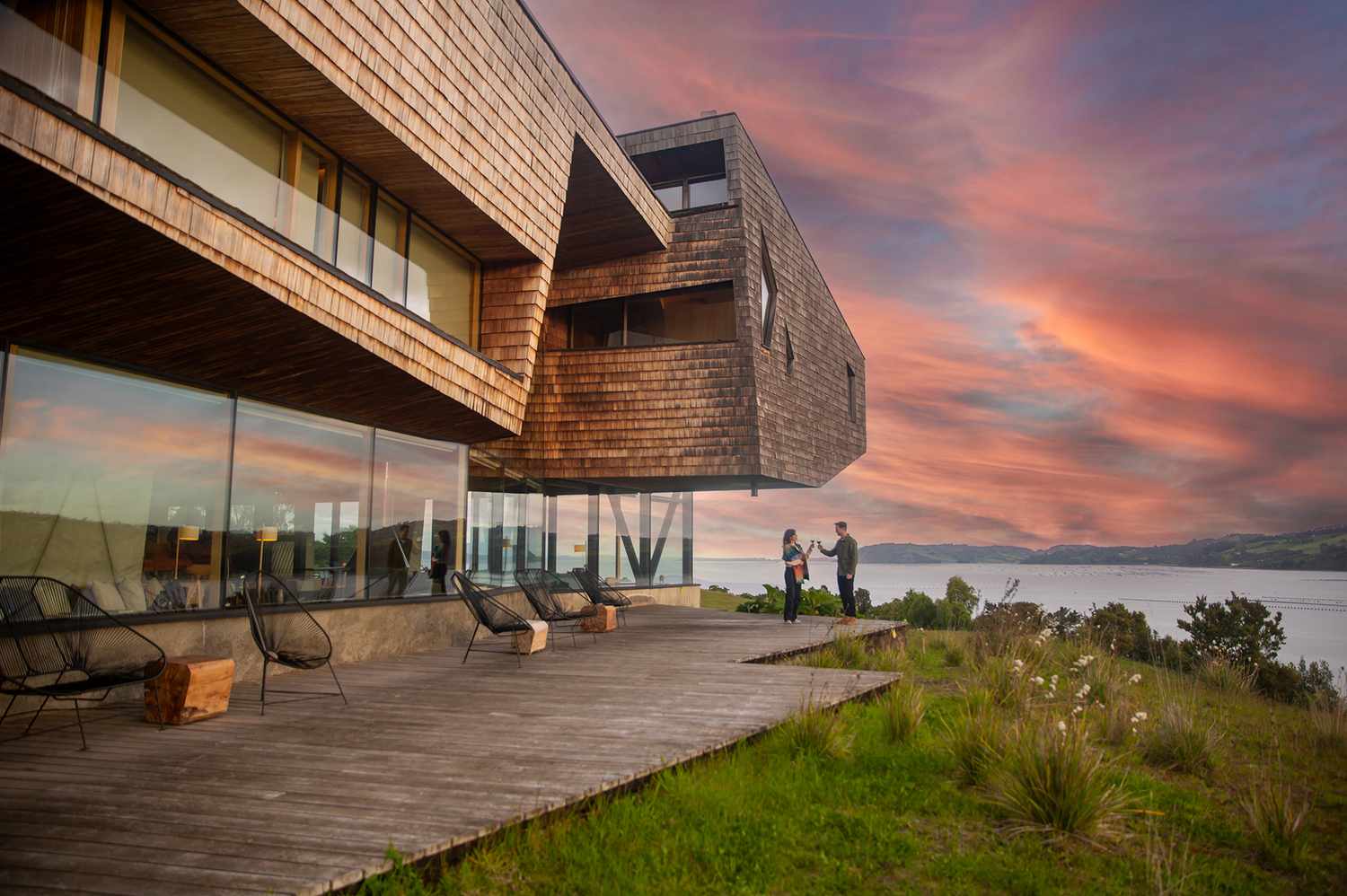
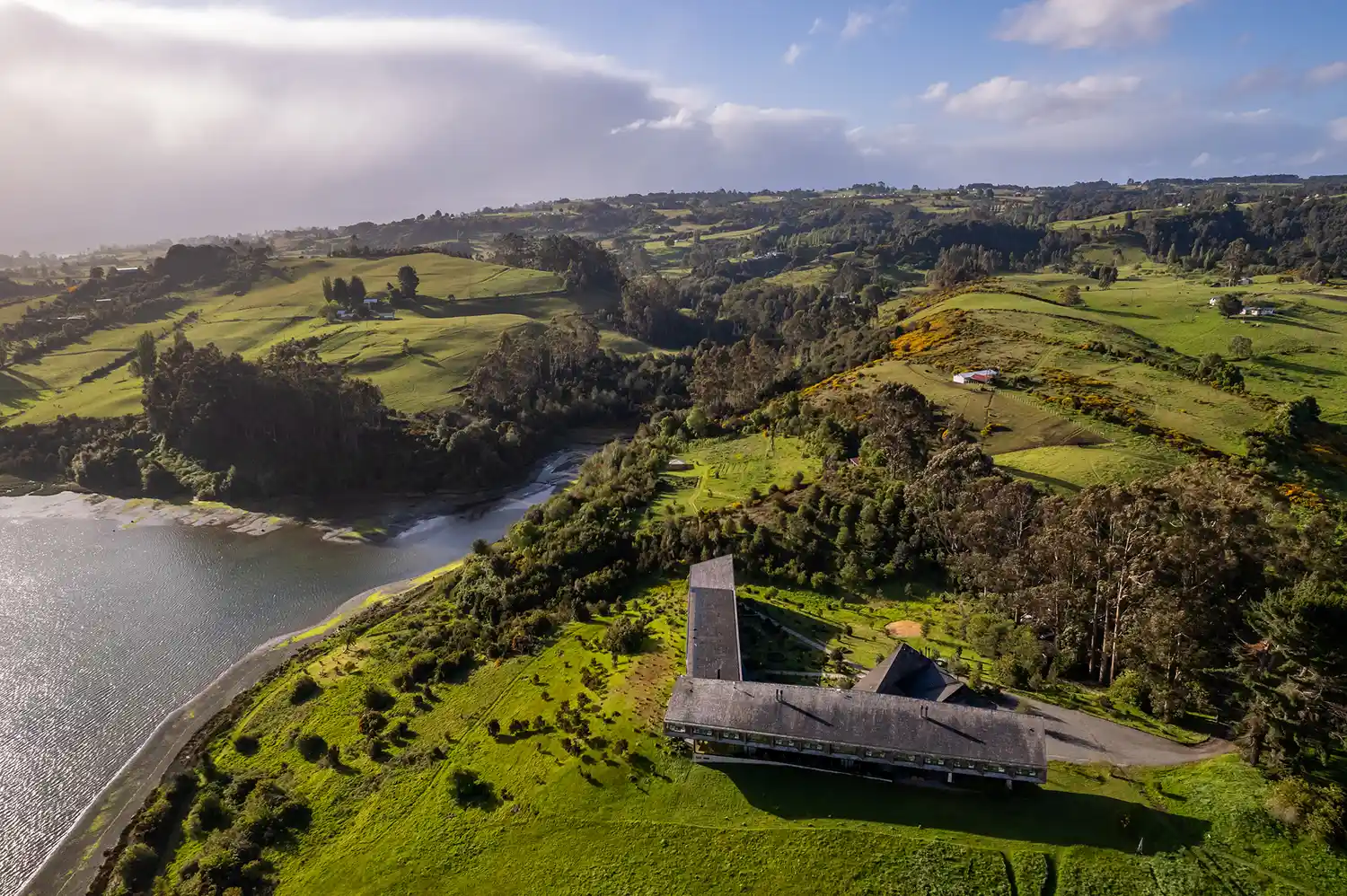
For travelers seeking a profound connection with the landscape, the Rilán Peninsula offers some of the most striking luxury stilt houses Chiloé has to offer. Foremost among these is Refugia Chiloé (now part of the Tierra Hotels family). This property is a masterpiece of sustainable architecture, designed by the renowned firm Mobil Arquitectos. While it isn’t a traditional palafito in the urban sense, the Refugia Chiloé architectural design pays homage to the stilt house concept by appearing to hover over the rolling hills of the peninsula.
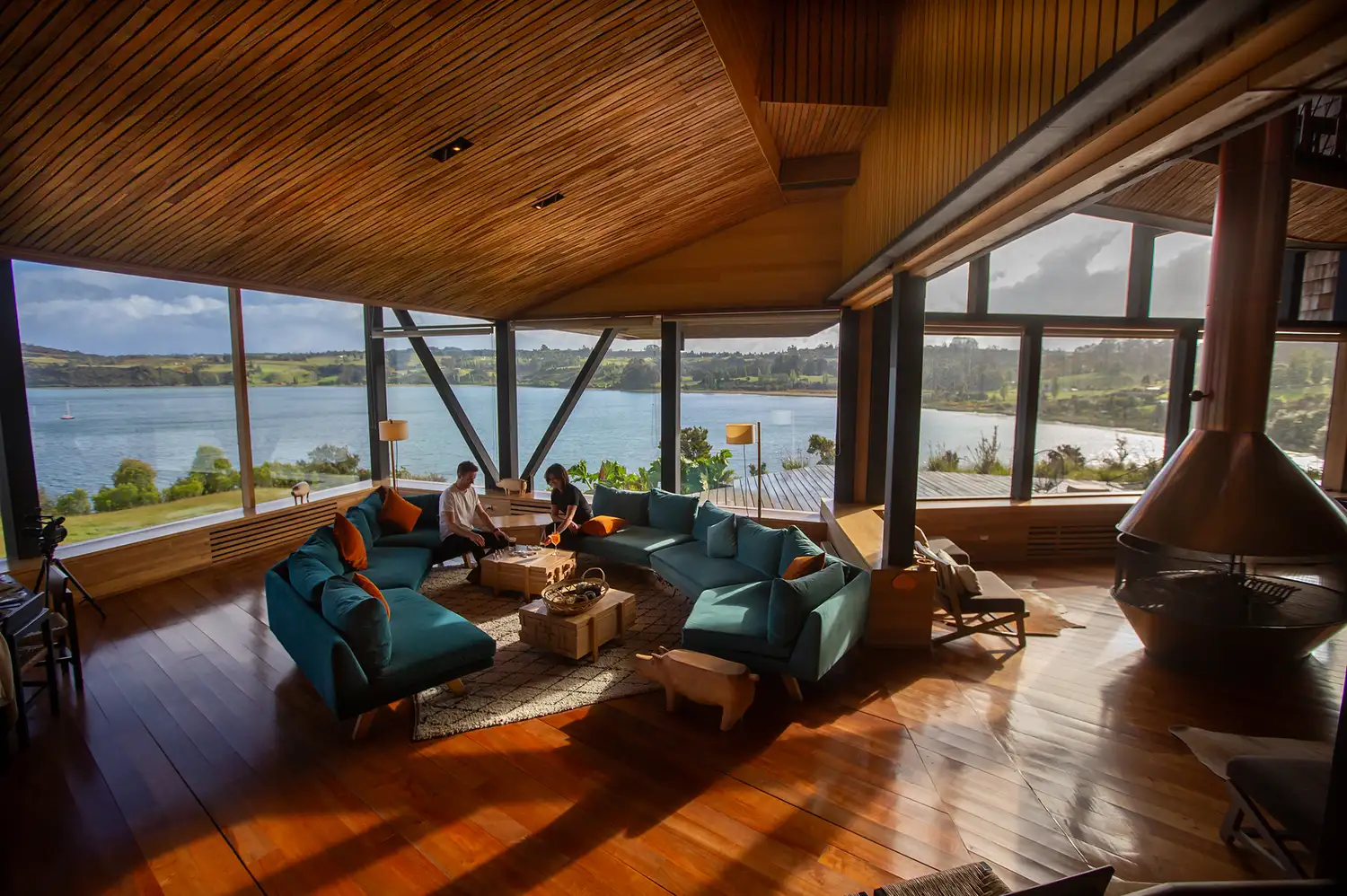
The hotel’s structure is a clever dialogue between the vernacular design of Chiloé and contemporary minimalism. It features floor-to-ceiling windows that perfectly frame Pullao Bay, allowing guests to observe the tidal changes and the coastal ecosystem without leaving their suites. The use of native woods throughout the interior creates a honey-hued warmth that contrasts beautifully with the grey-blue hues of the Chilean sky.
When considering the best luxury palafito hotels in Chiloé, Refugia stands out for its all-inclusive ethos. Beyond the room, the experience includes specialized spa treatments using local ingredients like honey and sea salt, and excursions that take you deep into the wetlands. For those seeking palafito accommodations near Chiloé National Park, this side of the island provides easier access to the wild, rugged west coast while maintaining a high level of refined comfort.
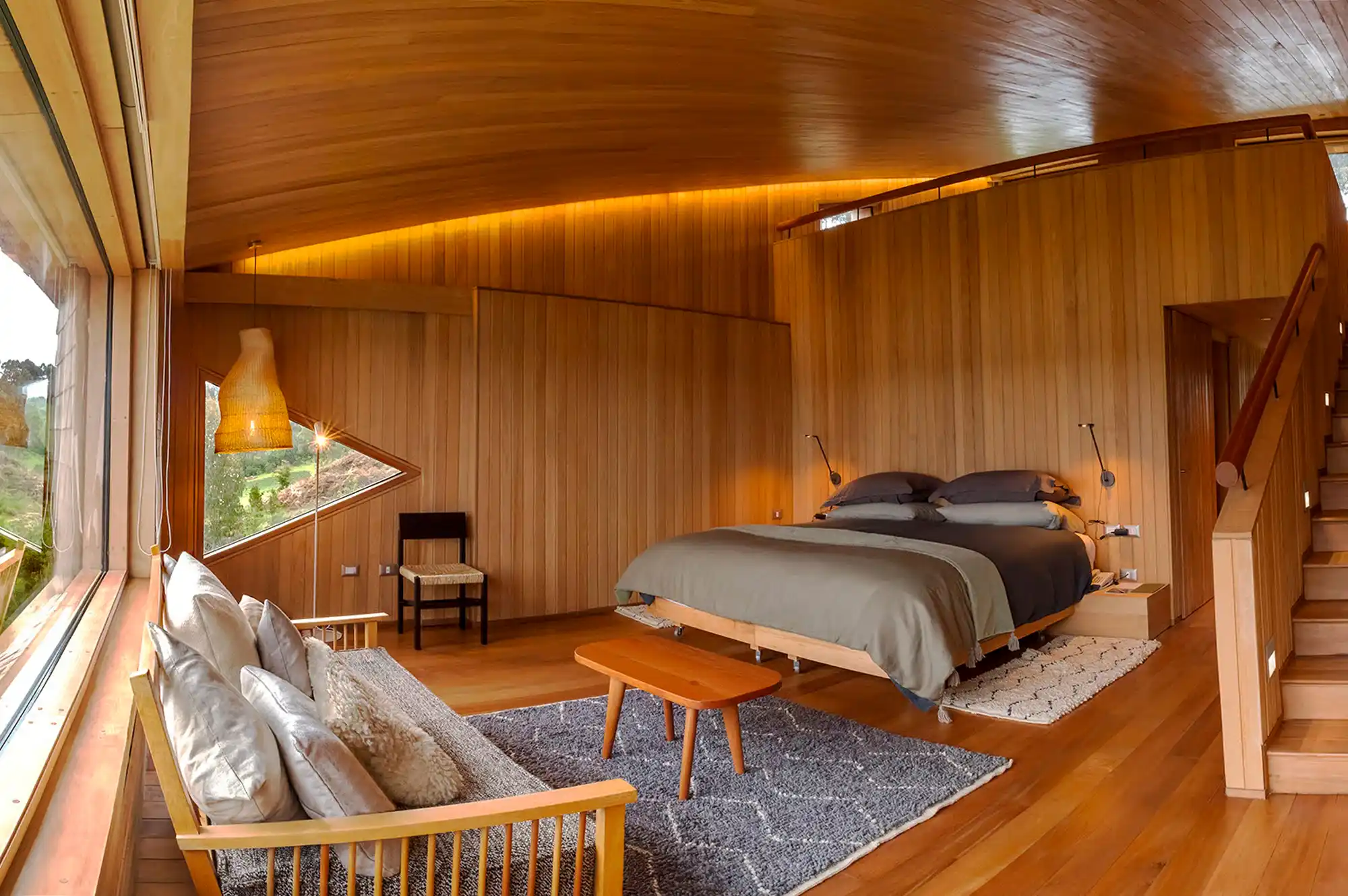
The feeling here is one of floating silence. Because the building is elevated, it minimizes its footprint on the delicate coastal soil, a core tennant of the sustainable architecture movement in South America. Guests can spend hours birdwatching from the comfort of their lounge, spotting the delicate flight of Hudsonian Godwits as they arrive from their nearly 9,000-mile migration.
Castro’s Boutique District: Urban Palafito Charm
If the Rilán Peninsula is about seclusion, the town of Castro is about the vibrant heartbeat of Chilote culture. Modern preservation and urban development in the city of Castro have concentrated remaining palafitos in the neighborhoods of Gamboa and Lillo, where many 19th-century structures have been converted into boutique hotels and restaurants.
For the traveler wondering how to choose the right Chiloé palafito stay, the decision often comes down to the desired atmosphere. The boutique stilt houses in Castro Chiloé, such as Palafito 1326, offer a more intimate, urban connection. These properties are often smaller, with a focus on Chilote craftsmanship and local artisanal textiles. Walking through the doors of a Castro palafito feels like entering a living museum, where the walls are lined with hand-woven woolen blankets and the furniture is carved by local hands.
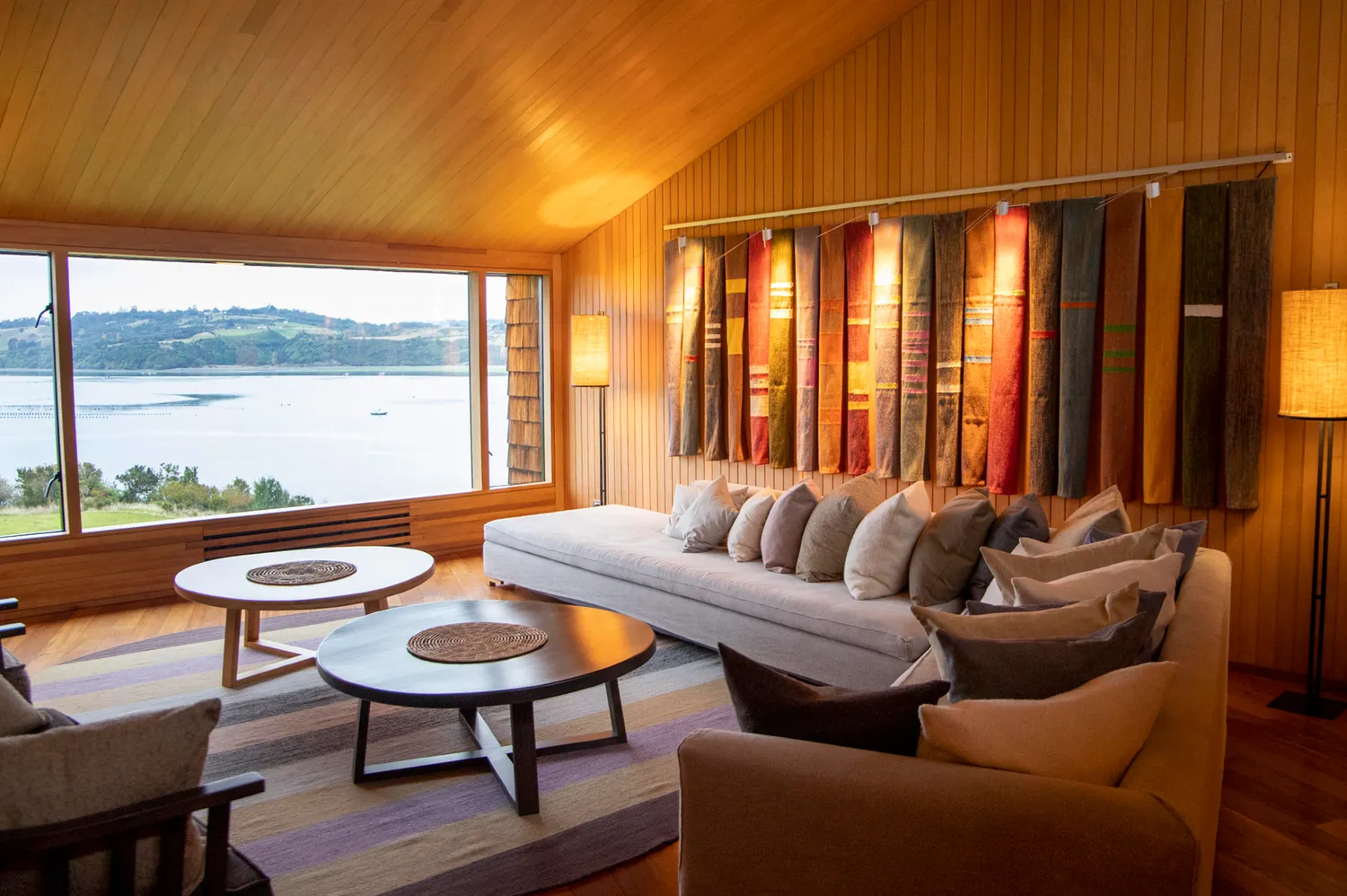
Staying in Gamboa allows you to witness the daily life of the archipelago. You can watch local fishermen paddle past your balcony or walk to the nearby markets to see the variety of potatoes (over 200 varieties are native to the island) and fresh seafood on display. Many of these boutique hotels encourage a digital detox, choosing not to include televisions in the guest rooms, which reinforces the focus on the sensory experience of the water and the wood.
Immersion Beyond the Room: Gastronomy and Wildlife
A stay in Chiloé palafito hotels is incomplete without engaging with the local culinary traditions. The most iconic of these is the Curanto cooking ritual. This is more than just a meal; it is a community event. Shellfish, meat, potatoes, and dumplings are layered in a pit with hot stones, covered with large Nalca leaves, and buried under damp earth to steam. The result is a smoky, savory feast that tastes of the island's earth and sea. Many luxury lodges organize private Curanto ceremonies for their guests, providing a front-row seat to this ancient tradition.
The coastal ecosystem surrounding these stilt houses is equally captivating. Because the hotels are built directly over or adjacent to the water, they serve as perfect stages for wildlife observation. From your private deck, you might spot Peale's dolphins playing in the surf or the charismatic Magellanic penguins that call these shores home during the breeding season.
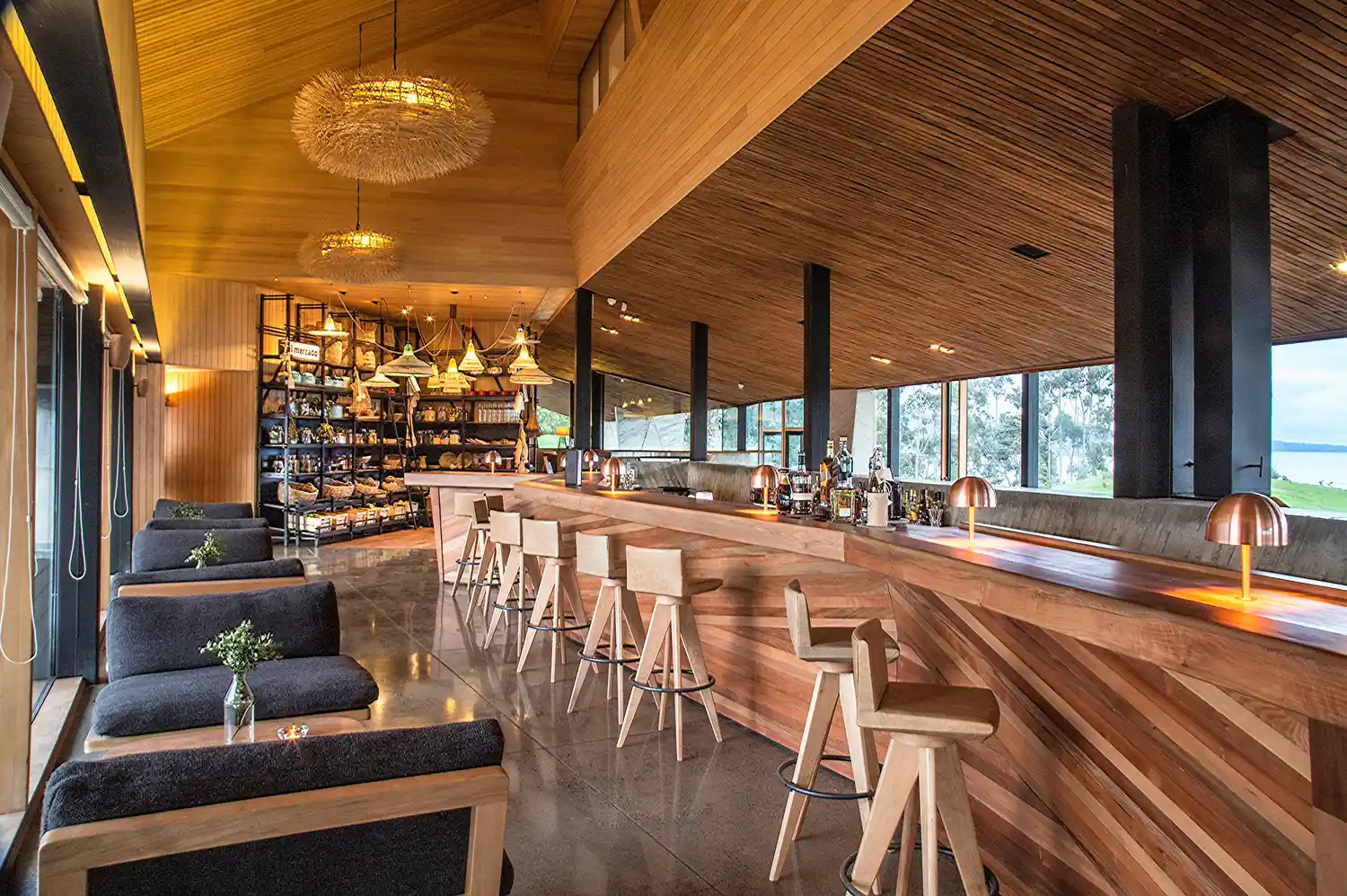
For those who enjoy active discovery, kayaking directly from the stilt foundations of your hotel at high tide offers a unique perspective of the architecture. Gliding under the massive timber pillars of the Gamboa neighborhood at eye level with the barnacles and seaweed highlights the engineering marvel of these traditional homes.
Plan Your Journey: Seasonality and Logistics
Planning a trip to Chiloé requires a spirit of adventure. The archipelago is famously rainy, which contributes to its lush, emerald-green landscapes and high-quality timber. To maximize your chances of blue skies, aim for the months between October and May. Even during the peak summer, the weather is mild, rarely exceeding 70°F (21°C), making it an ideal destination for those who prefer active exploration over heat.
Getting there is part of the story. Most travelers fly from Santiago to Puerto Montt and then take a ferry across the Chacao Channel, or fly directly into the small airport in Castro. While it may feel like a long journey, the reward is an environment that feels untouched by the fast-paced modern world.
When booking, remember that the most popular Chiloé palafito hotels are small and often have fewer than a dozen rooms. For boutique stays in Castro or architectural icons like Refugia, it is wise to book at least six months in advance, especially if you plan to visit during the Chilean summer holidays in January and February. For those looking for a slightly more budget-friendly approach, there are affordable palafito lodges Chiloé island provides in the Lillo district, offering a more rustic but equally authentic experience.
FAQ
What is it like to stay in a palafito hotel in Chiloé?
Staying in a palafito is a deeply sensory experience. You are living between the tides, meaning you will hear the gentle movement of water beneath your room and feel a closer connection to the maritime environment. The interiors are typically warm and wood-centric, offering a cozy retreat from the cool, misty climate of the southern Pacific.
Where are the best palafitos located in Castro?
The best examples are found in the neighborhoods of Gamboa and Lillo. Gamboa is particularly famous for its concentration of boutique hotels and vibrant, freshly painted facades. These areas offer the best walking access to local cafés, artisan markets, and the historic wooden cathedral.
Are palafito hotels in Chile safe during high tide?
Yes, they are exceptionally safe. These structures have been engineered over centuries to withstand the dramatic tidal shifts of the archipelago. Modern hotels have reinforced foundations using high-density luma wood and modern concrete reinforcements where necessary to ensure stability and safety.
How much does a night in a Chiloé palafito hotel cost?
Pricing varies significantly based on the level of luxury. Simple, traditional guesthouses in Castro may start around $75 USD per night. Middle-range boutique hotels typically range from $150 to $300 USD, while high-end, all-inclusive architectural lodges like Tierra Chiloé can cost upwards of $850 USD per night.
What are the top-rated stilt house hotels in Chiloé?
Top-rated options include Palafito 1326 for its boutique urban charm, Palafito Cucao for those wanting to be near the National Park, and Tierra Chiloé (formerly Refugia) for the ultimate luxury architectural experience. Each offers a different perspective on the island's unique stilt-house heritage.