Quick Facts
- Culture Score: 9.27/10 (Titan Travel World Ranking)
- UNESCO Significance: Home to the 13th-century Alhambra complex and Albaicín district
- Culinary Scene: A rare surviving culture of complimentary tapas paired with Michelin-starred fine dining
- Modern Heritage: A 70,000 m² Science Park bridging technology and history
- Geography: Nested in the Sierra Nevada foothills, offering a dramatic mountain-to-sea backdrop
- Future Ambition: Granada is currently a finalist for the title of European Capital of Culture in 2031
Granada has recently been crowned the world's top cultural capital, boasting a staggering 9.27 score for its density of UNESCO sites and culinary excellence. With its unique blend of Moorish influence and modern innovation, these Granada cultural attractions offer a journey through time that captivates every traveler who walks its cobblestone streets.
The Royal Legacy: Exploring the Alhambra and Generalife
There is a specific kind of silence that settles over the Alhambra at dawn. As the first light hits the red walls of the Sabika Hill, you can almost hear the echoes of the Nasrid dynasty. The Alhambra is not merely a palace; it is a sprawling fortress-city that represents the high-water mark of Moorish influence in Europe. Walking through the Nasrid Palaces, the intricate lace-like plasterwork and the mathematical precision of the honeycombed ceilings evoke a sense of spiritual and architectural wonder.
The adjacent Generalife gardens offer a sensory contrast. Here, the Mudéjar architecture is framed by the constant, rhythmic sound of running water—a symbol of life and purification in Islamic culture. To see the jasmine-scented pathways of the Courtyard of the Cypress is to understand why this was the summer retreat for kings.
For those seeking the best historic sites in Granada Spain, the transition from the Islamic era to the Christian reconquest is best witnessed at the Granada Cathedral and the Capilla Real. Comparing gothic and renaissance architecture at Granada Cathedral reveals a grand, circular design that was intended to be the definitive statement of a new era. The Royal Chapel, or Capilla Real, holds the remains of the Catholic Monarchs, Isabella and Ferdinand, and serves as a somber, beautiful bridge between the city’s medieval past and its imperial future.
Pro Tip: To secure your entry, I highly recommend looking for insider tips for booking Alhambra fortress tickets at least three months in advance. The daily limit is strictly enforced, and tickets for the Nasrid Palaces are timed to the minute. If you miss the window, consider a night tour for a hauntingly beautiful perspective on the historic sites.
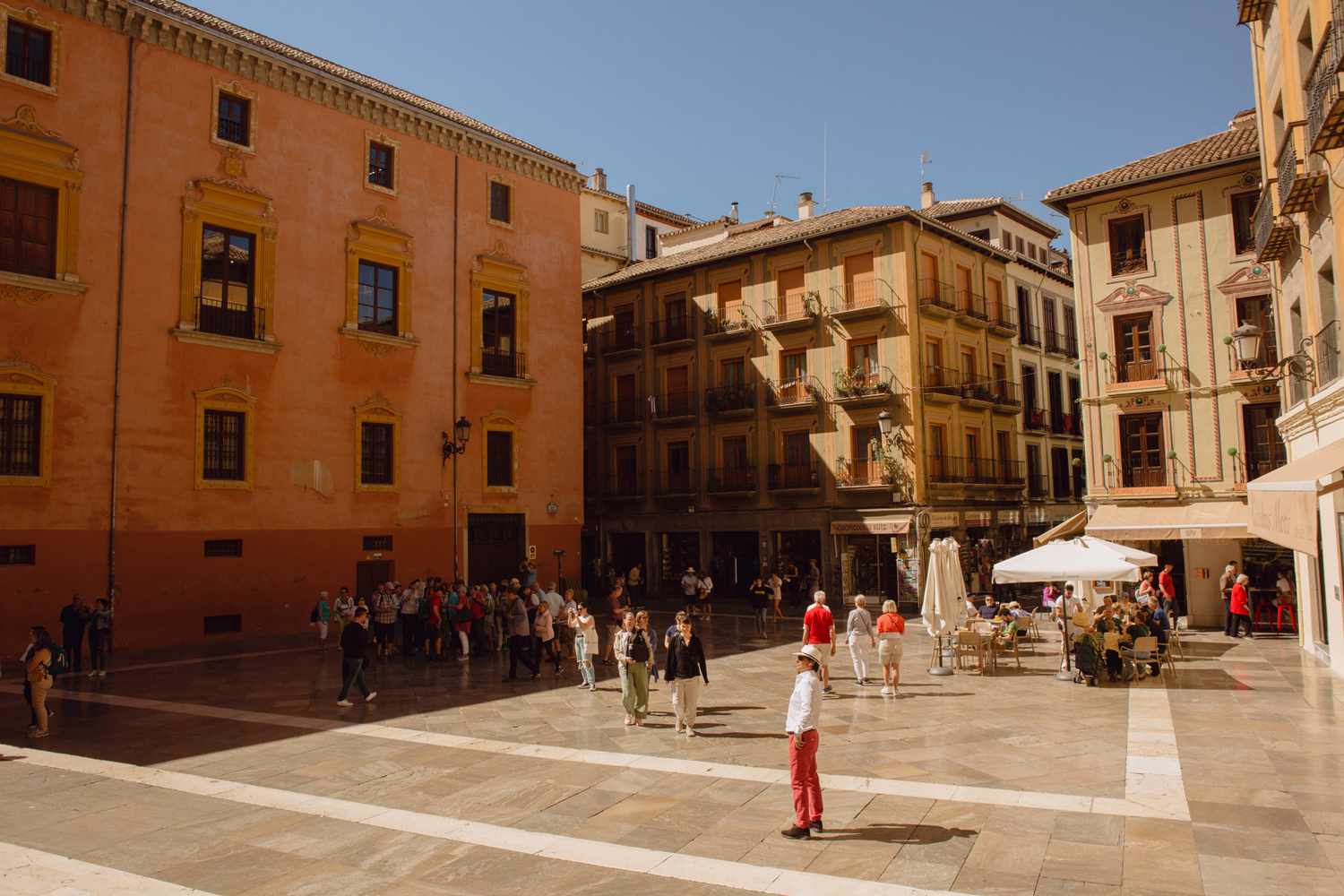
The Soul of the Streets: Albaicín and Sacromonte Districts
While the Alhambra watches from above, the soul of the city thrives in the winding, white-washed labyrinth of the Albaicín. This UNESCO-protected district is a living museum of the Andalusian lifestyle. As a cultural travel guide to Granada Andalusia hidden gems, the Albaicín offers narrow alleys that suddenly open into miradores (viewpoints) where the Sierra Nevada peaks frame the Alhambra in a postcard-perfect silhouette.
If you follow the scent of woodsmoke and the sound of a distant guitar further up the hill, you will reach the Sacromonte district. This area is famous for its unique gypsy heritage and traditional cave dwellings carved directly into the hillside. Unlike the polished stages of Madrid, here you can witness authentic flamenco shows in the Sacromonte district within the intimate, cave-like settings known as zambras. The zambra dance is specific to this neighborhood, characterized by its raw emotion and barefoot intensity.
A well-planned walking tour itinerary for Granada's Albaicin and Sacromonte should also include the Realejo Jewish Quarter. Once the heart of the city’s Jewish community, Realejo is now a vibrant blend of street art and historic mansions. It provides a quieter, more grounded look at the city’s complex layers of faith and identity.
| Neighborhood | Key Cultural Draw | Vibe |
|---|---|---|
| Albaicín | Moorish architecture and tea houses | Historic, labyrinthine, romantic |
| Sacromonte | Cave dwellings and Zambra dance | Raw, bohemian, traditional |
| Realejo | Sephardic history and street art | Artistic, local, residential |
From Tapas to Fine Dining: A Culinary Revolution
Granada is perhaps best known to foodies for its legendary free tapas culture. In an era of increasing commercialization, it remains one of the few places in Spain where ordering a drink—be it a glass of local Alhambra beer or a robust red from the Sierra Nevada foothills—guarantees a plate of food on the house. This isn't just a snack; it’s a social cornerstone of the Andalusian lifestyle.
However, the city's culinary identity is evolving. In 2026, Granada five-star restaurant recommendations for foodie travelers are increasingly highlighting a sophisticated "Mountain to Sea" philosophy. Restaurants like the Michelin-starred Faralá are redefining local ingredients. Imagine Motril prawns served with a delicate foam of local citrus, or suckling lamb slow-cooked to represent the rugged terrain of the nearby mountains.
For a more literal taste of history, visit Especias Barranco. This historic spice shop is a sensory portal to the past, filled with the unmatched scents of Al-Andalus tea houses—saffron, dried hibiscus, and custom Moroccan tea blends that have been traded here for generations.
Beyond History: Modern Culture at the Science Park
While many come to Granada for the past, the city is equally focused on the future. This forward-thinking attitude is part of why Granada is currently one of the four finalist cities in Spain vying for the title of European Capital of Culture for 2031.
One of the most impressive modern Granada cultural attractions is the Parque de las Ciencias, or Science Park. Spanning over 70,000 m², this interactive museum is much more than a children’s attraction. It provides family-friendly cultural activities at Granada Science Park that bridge the gap between Islamic astronomical history and modern aerospace technology. From the butterfly house to the observation tower, it offers a contemporary panoramic view of a city that refuses to be stuck in time.
Planning Your 2026 Cultural Journey
Transitioning into a global cultural hub has come with significant infrastructure upgrades. By 2026, the high-speed train connections from Madrid and Seville have made Granada more accessible than ever. Travelers no longer need to navigate grueling bus rides; instead, you can arrive in the city center via the expanded Metro system for a few Euros.
When deciding on the best time to visit Granada for cultural festivals and events, the late spring is unparalleled. The Festival of Music and Dance (June-July) sees world-class performers taking over the courtyards of the Alhambra, turning the stone fortresses into acoustic masterpieces.
For a relaxing end to a Granada historic sites itinerary for a weekend getaway, I suggest booking a session in one of the city's traditional Hammams. These modern interpretations of the ancient Moorish baths, like Hammam Al Ándalus, offer a quiet space to reflect on your journey through cold, warm, and hot pools amidst flickering lanterns and the scent of amber.
FAQ
What are the top cultural attractions to visit in Granada?
The primary attractions include the Alhambra fortress and Generalife gardens, the Granada Cathedral, and the Royal Chapel. Beyond these, the historic districts of Albaicín and Sacromonte, along with the Science Park, are essential stops for a holistic view of the city's culture.
How many days do I need to see the main historical sites in Granada?
A minimum of three days is recommended. This allows one full day for the Alhambra complex, one day to explore the Albaicín and Sacromonte neighborhoods, and a final day to visit the Cathedral and modern sites like the Science Park or a traditional Hammam.
Is it necessary to book tickets in advance for Granada's monuments?
Yes, it is absolutely essential, especially for the Alhambra. Tickets can sell out weeks or even months in advance. It is also wise to book reservations for popular zambra flamenco shows and Michelin-starred restaurants like Faralá ahead of your arrival.
What are the best free cultural activities in Granada?
Walking through the Albaicín and enjoying the views from the Mirador de San Nicolás is completely free. Additionally, many of the city's parks and the historic Realejo district offer wonderful atmospheric walks. The most iconic "free" activity is the tapas culture—you simply pay for your drink and the food is provided.
Which historical neighborhoods in Granada are worth exploring?
The Albaicín is a must for its Moorish history, while Sacromonte is essential for gypsy culture. Realejo offers a glimpse into the Jewish history of the city, and the Centro area around the Cathedral highlights the grandiose Spanish Renaissance and Baroque influence.
Is the Sacromonte district worth visiting for its culture?
Absolutely. It provides a perspective on Granada that is distinct from the royal history of the Alhambra. The combination of cave dwellings, the history of the Romani people, and the raw energy of authentic zambra dance makes it one of the most unique cultural experiences in Spain.
Experience the Magic of Granada
Granada is a city that rewards the curious traveler. Its 9.27 ranking is not just a collection of data points; it is a reflection of a place where history is alive, where every tapas bar tells a story, and where the mountains seem to guard the secrets of the past. Whether you are standing in the shadow of the peaks or deep within a Sacromonte cave, you will find that the world’s new cultural capital is a destination that stays with you long after the scent of orange blossoms has faded.