Quick Facts
- Entrance Fee: $5 per vehicle / $1 for pedestrians and cyclists
- Hours: Refuge gates are open daily from 6 AM to sunset; the Visitor Center operates from 9 AM to 4 AM
- Avian Diversity: More than 350 recorded species, with 253 occurring annually
- Prime Location: Approximately 25 miles south of Tallahassee along the Gulf of Mexico (GPS: 30.074350, -84.180267)
- Geographic Scope: Over 86,000 acres spanning three counties and 43 miles of coastline
- Peak Visitation: March for spring migration and October through January for wintering waterfowl
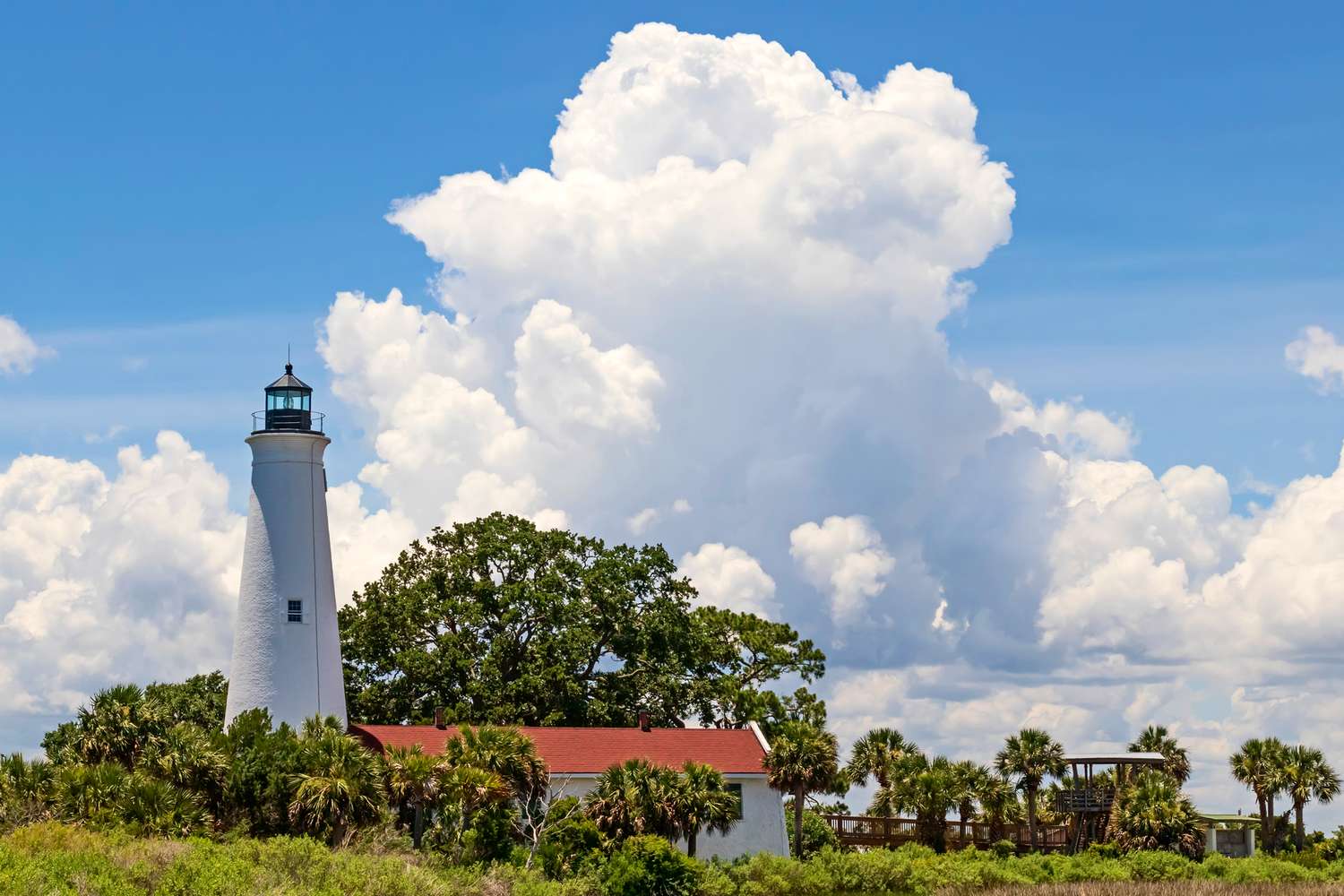
St Marks birding offers one of Florida's most primordial experiences, spanning 86,000 acres of the Forgotten Coast. Whether you are hunting for wintering waterfowl migration or spring songbirds, this guide provides the essential tips for navigating St. Marks NWR birding trails. The St. Marks Lighthouse and the Lighthouse Levee Trail are the premier St Marks birding spots, offering views of Gulf saltwater marshes and freshwater impoundments where a vast array of species congregate throughout the year.
Exploring the Forgotten Coast: Geography & Habitat
To understand the allure of this region, one must first look at the map. Situated in the heart of the Big Bend region, St. Marks National Wildlife Refuge represents one of the oldest units in the National Wildlife Refuge System. Established in 1931, it was envisioned as a vital sanctuary for migratory birds. Today, it protects more than 86,000 acres across Taylor, Jefferson, and Wakulla counties, forming a critical link in the ecological chain of the Gulf of Mexico.
The landscape here is a complex estuarine tapestry. As you move from the pine flatwoods toward the coast, the environment transitions through hardwood hammocks into vast saltwater marshes and tidal creeks. This geographic diversity is the engine behind the refuge's immense avian biodiversity. Historically, this land was the home of the Apalachee people, and that sense of ancient, untouched wilderness remains palpable as you navigate the brackish freshwater impoundments designed to provide stable feeding grounds even when the surrounding tides fluctuate.
For the modern explorer, the refuge serves as a gateway to the Forgotten Coast, a stretch of Florida that has resisted the high-rise development seen elsewhere in the state. Instead of condominiums, you find a coastline defined by limestone shelves and seagrass beds that support a food web ranging from blue crabs to White Pelicans.
The Lighthouse Levee: Prime Birding Hotspots
If there is a ground zero for St Marks birding, it is the seven-mile stretch of Lighthouse Road that terminates at the historic St. Marks Lighthouse. This drive is not merely a means of transit but a destination in itself, flanked by managed pools and vast estuarine ecosystems.
Lighthouse Pool and Tower Pool
These two freshwater impoundments are arguably the most productive St. Marks Lighthouse birding spots. During the winter months, the Lighthouse Pool becomes a swirling kaleidoscope of ducks and wading birds. It is common to see the elegant Roseate Spoonbill filtering through the shallows with its distinctive spatulate bill, or the American Avocet, whose recurved beak and striking plumage make it a favorite for those seeking St Marks Lighthouse birding photography spots.
For the best results, use a spotting scope to scan the far edges of the Tower Pool. The distance can be deceptive, and the subtle differences between species of shorebirds—often referred to by birders as "peeps"—require the magnification that only high-quality optics can provide.
The Estuarine Edge
Moving toward the Gulf, the habitat shifts. Here, the saltwater marshes take over, dominated by black needlerush and cordgrass. This is the domain of the Clapper Rail and the Seaside Sparrow. Because these birds are notoriously shy, listening for their mechanical, clicking calls is often more effective than visual scanning.
Pro Tip: The Tide x Timing Strategy Experienced birders know that the best shorebird viewing occurs 2-3 hours before a high tide. As the water rises in Apalachee Bay, shorebirds are pushed from the distant mudflats toward the levees and impoundments, bringing them within easy range of binoculars and cameras.
Seasonal Rhythms: Migration & Tides
Timing your visit is essential to maximizing your experience. While there is always something to see, the Florida bird migration seasons dictate the specific cast of characters you will encounter.
- Winter (November – February): This is arguably the most spectacular season. St. Marks National Wildlife Refuge has recorded more than 350 bird species, and during the cooler months, it becomes a sanctuary for nearly 200 different bird species. You can expect to see a regular contingent of 19 duck species and 15 shorebird species, including northern shoveler, pintail, and redhead ducks.
- Spring (March – May): Migration begins in earnest around the first of March. The refuge serves as a vital first landfall for exhausted songbirds crossing the Gulf of Mexico. The oak hammocks can suddenly fill with colorful warblers, tanagers, and buntings after a spring weather front.
- Fall (September – October): While shorebirds begin returning as early as August, October is the peak for raptor migration. It is also the best time of year for St Marks birding if you want to witness the massive monarch butterfly migration. Thousands of these orange-and-black butterflies descend on the seaside oxeye and saltbushes along the coast, creating a shimmering spectacle before they continue their journey to Mexico.
Navigating the Trails: A Birder’s Map
While Lighthouse Road allows for excellent birding from your vehicle—acting as a blind that keeps birds from flushing—true immersion requires stepping onto the St. Marks NWR birding trails. Most of the trails follow the tops of the levees, providing an elevated vantage point over the water.
Lighthouse Levee Trail
This 0.6-mile trail is one of the most accessible Lighthouse Levee Trail hotspots. It loops around the Lighthouse Pool, offering 360-degree views of both fresh and saltwater habitats. Because of its proximity to the Gulf, this is a prime spot for spotting Magnificent Frigatebirds soaring overhead or Reddish Egrets performing their characteristic "canopy feeding" dance in the tidal flats.
The Florida National Scenic Trail (FNST)
For those looking for a longer trek, a significant segment of the Florida National Scenic Trail passes through the refuge. These routes are more rugged and take you through the deep pine flatwoods and cabbage palm hammocks. On these inland trails, the focus shifts toward the Red-cockaded Woodpecker, an endangered species that nests in the old-growth longleaf pines. Look for the white resin wells on the trunks of living pines, a signature of their nest sites.
Wildlife Observation Structures
There are several wildlife observation structures located along the Mounds Trail and near the Headquarters Pond. These elevated platforms are excellent for St Marks NWR birding for beginners tips because they provide a stable, sheltered environment to practice using a spotting scope or field guide without the wind interference common on the open levees.
| Trail Name | Length (Round Trip) | Difficulty | Primary Habitat |
|---|---|---|---|
| Lighthouse Levee | 0.6 Miles | Easy | Freshwater / Salt Marsh |
| Mounds Trail | 1.1 Miles | Moderate | Hardwood Hammock / Ponds |
| Cedar Island | 1.0 Miles | Moderate | Estuarine Marsh / Pine |
| FNST Segment | 40+ Miles | Strenuous | Diverse / Wilderness |
FAQ
What is the best time of year for birding at St. Marks?
The peak periods for birdwatching are from October through January for wintering waterfowl and March through early May for the spring neotropical migration. October also features the famous monarch butterfly migration.
What kinds of birds can be seen at St. Marks National Wildlife Refuge?
With over 350 species recorded, visitors can see everything from Roseate Spoonbills and American Avocets to 19 different species of ducks. Bald Eagles, Ospreys, and various wood-warblers are also common depending on the season.
Is there an entrance fee for St. Marks National Wildlife Refuge?
Yes, the entry fee is $5 per private vehicle. Pedestrians and cyclists are charged $1. Frequent visitors may consider an annual refuge pass or a Federal Duck Stamp, which also grants entry.
What are the best birding trails at St. Marks?
The Lighthouse Levee Trail is the most popular for its view of Lighthouse Pool. For a more secluded experience, the Mounds Trail and the various spurs of the Florida National Scenic Trail offer excellent opportunities to see woodland and marsh species.
Where are the best spots for bird photography in St. Marks?
The pools along Lighthouse Road, specifically Lighthouse Pool and Tower Pool, provide the closest proximity to wading birds and waterfowl. Early morning light at the St. Marks Lighthouse also offers iconic shots of shorebirds against a historical backdrop.
Plan Your Visit
Before you head out into the marsh, a little preparation goes a long way. The refuge is a wild place, and its beauty is matched only by its exposure to the elements.
- Essentials: Carry high-quality binoculars and, if possible, a spotting scope. The distances across the impoundments can be vast.
- Protection: Florida’s sun is intense even in winter. Bring a wide-brimmed hat, polarized sunglasses, and reef-safe sunscreen. Bug repellent is a necessity from spring through autumn.
- Logistics: There is no food or lodging within the refuge. The nearby town of St. Marks offers small-scale dining, while Tallahassee provides full amenities about half an hour to the north.
- Contact Information: For real-time updates on gate closures or rare bird sightings, you can reach the Visitor Center at 850-925-6121.
When visiting, please adhere to ecotourism ethics: keep a respectful distance from nesting sites, never feed the wildlife, and stay on the marked levees. St. Marks is a precious remnant of the Gulf's natural heritage; by treating it with care, we ensure that the wintering waterfowl migration continues to have a safe harbor for generations to0 come.