Quick Facts
- Highest Category: PC 1 indicates a vessel capable of year-round operation in all polar waters, though currently, no cruise ship meets this specific tier.
- Industry Standard: Most modern luxury expedition vessels operate with a PC 6 rating, designed for summer and autumn navigation in medium first-year ice.
- The High-Performance Exception: The French vessel Le Commandant Charcot is the only cruise ship with a PC 2 rating, allowing it to reach the Geographic North Pole.
- Regulatory Milestone: The International Maritime Organization's Polar Code, which entered into force in January 2017, established mandatory safety and pollution measures for polar vessels.
- Capability Gap: A PC 5 vessel can withstand thicker ice than a PC 6 vessel, often allowing for earlier season starts or deeper penetration into the Ross Sea.
- Standard Transition: Polar class ratings are issued by IACS members, replacing various fragmented national ice class systems.
Understanding polar class ratings is the single most important factor when choosing an expedition cruise. Whether you are navigating the thin first-year ice of the Antarctic Peninsula or the multi-year pack ice of the Ross Sea, the IACS-defined hull strength of your vessel dictates your itinerary's success and your overall safety in some of the most remote regions on Earth.
Understanding the Polar Class Hierarchy (PC 1–PC 7)
In the realm of naval architecture, structural integrity is not a matter of luxury, but of physics. The International Association of Classification Societies (IACS) established a unified set of polar class ratings to replace a confusing patchwork of national standards. These ratings, numbered from PC 1 down to PC 7, define exactly how much pressure a hull can withstand and how much ice it can push through before safety is compromised.
The Polar Class system is categorized into seven distinct levels. For a cruise traveler, the numbers usually seen on luxury brochures range from PC 2 to PC 7.
| Polar Class | Ice Description | Typical Operational Season |
|---|---|---|
| PC 1 | All polar waters | Year-round |
| PC 2 | Moderate multi-year ice | Year-round |
| PC 3 | Second-year ice with multi-year inclusions | Year-round |
| PC 4 | Thick first-year ice with old ice inclusions | Year-round |
| PC 5 | Medium first-year ice with old ice inclusions | Year-round |
| PC 6 | Medium first-year ice | Summer and autumn |
| PC 7 | Thin first-year ice | Summer and autumn |
While PC 1 and PC 2 vessels are essentially icebreakers or heavy-duty research ships, the expedition cruise industry has recently pushed toward these higher tiers. For decades, expedition ships were often converted research vessels or built to lower standards. Today, a PC 6 rating explained simply means the ship is built for the "standard" polar season—December in Antarctica or July in the Arctic. Ships with this rating, such as the Silver Endeavour or the Seabourn Venture, are perfectly suited for the Antarctic Peninsula where the ice is generally medium first-year ice.
However, if your goals involve crossing the Weddell Sea or reaching the high Arctic, the difference between PC 5 and PC 6 cruise ship capabilities becomes vital. A PC 5 vessel, like the National Geographic Endurance, possesses a stronger hull reinforcement and more powerful propulsion, allowing it to operate in first-year ice even when it contains dangerous old ice inclusions.
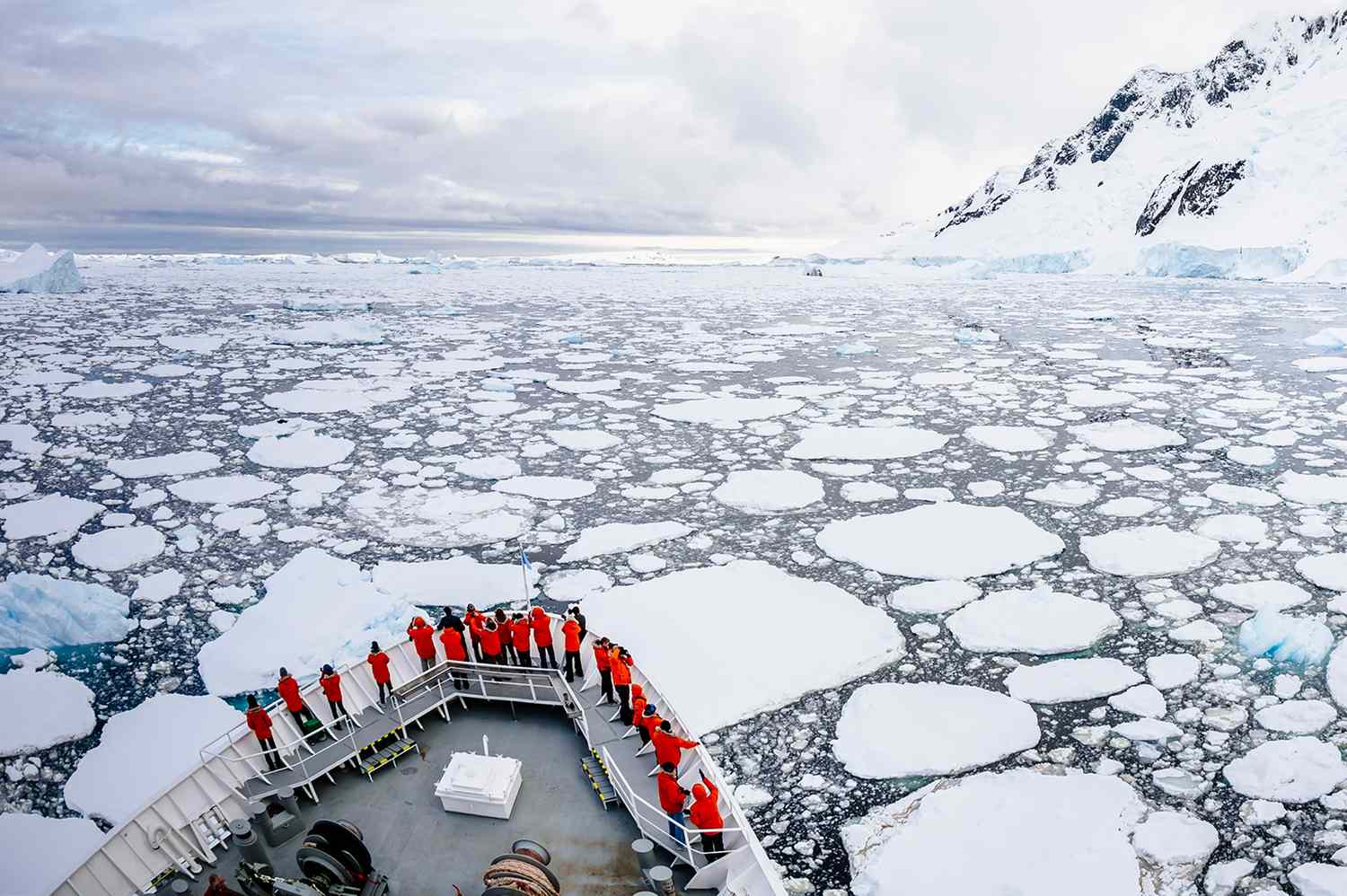
Ship Spotlight: Le Commandant Charcot As of 2025, the French expedition ship Le Commandant Charcot remains the only cruise vessel in operation with a PC 2 rating. This signifies a monumental leap in maritime capability, allowing it to navigate year-round in moderate multi-year ice conditions. While most ships wait for the ice to melt, the Charcot can literally break its own path to the Geographic North Pole.
Ice Class vs. Polar Class: Key Differences Explained
A common point of confusion for travelers is the distinction between an ice class vs polar class designation. Many older vessels or those designed for northern European routes carry an ice class, such as the Finnish-Swedish Ice Class 1A or 1A Super. While these sounding impressive, they are primarily intended for the Baltic Sea and other "non-polar" waters where ice is thinner and more transitory.
The difference between ice class and polar class ratings lies in the environment they were built to survive. Ice class identifies ships reinforced for general icy conditions where icebreakers are usually nearby. In contrast, polar class is a specialized framework designed for the unique challenges of the Arctic and Antarctic, where a ship might be thousands of miles from the nearest rescue vessel.
A PC 6 vessel is roughly equivalent to a 1A Super ice class in terms of hull thickness, but it must meet additional Polar Code compliance standards that a Baltic ship does not. These include specialized survival equipment for extreme cold, reinforced seawater cooling systems that won't freeze shut, and structural integrity that accounts for long-range isolation. When debating ice class 1A Super vs PC6 comparison, the PC 6 is almost always the superior choice for a remote expedition because it considers the risk of encountering old ice inclusions—remnants of multi-year ice that are significantly harder and more dangerous than first-year ice.
How Your Ship's Rating Impacts the Expedition Experience
When considering how to choose expedition ship based on polar class, one must look beyond the champagne and butler service. The hull's rating directly dictates the destination accessibility. If you are booked on a PC 7 ship for an early November voyage to the Antarctic Peninsula, you may find your captain turning back frequently because the seasonal pack ice hasn't cleared enough for the ship's lighter hull.
The benefits of PC2 polar class for Arctic cruising are even more profound. These ships can traverse the legendary Northwest Passage with a much higher success rate because they do not have to wait for the perfect window of open water. They can push through the multi-year sea ice that traps less capable vessels.
However, there is often a "comfort penalty" associated with higher ratings. Heavier hulls and more powerful engines required for PC 2 or PC 5 ratings can sometimes result in more vibration or noise when the ship is actively breaking ice. Conversely, modern PC 6 vessels are often the "sweet spot" for most travelers, offering the best balance of speed, fuel efficiency, and structural integrity for the standard tourist season.
The expedition ship ice capabilities also intersect with IAATO safety protocols. Smaller ships (usually those carrying fewer than 500 passengers) are the only ones permitted to make shore landings in Antarctica. Therefore, most high-rated polar class vessels are intentionally built small to ensure guests can actually get off the ship and walk among the penguins. If a ship has a high PC rating but carries 1,000 passengers, its ice capability might be impressive, but your Antarctic Peninsula experience will be limited to scenic cruising from the balcony.
How polar class affects expedition cruise itineraries is most apparent in places like the Ross Sea or the Weddell Sea. These regions are notorious for "trapping" ships when the wind shifts and pushes pack ice together. A captain on a PC 6 ship must be extremely cautious, often staying on the outskirts of the ice. A captain on a PC 5 or PC 2 ship has a much wider margin of safety, allowing them to linger longer in remote bays to watch emperor penguins or explore historic huts.
Modern Safety and Sustainability Tech in Polar Regions
Beyond the raw thickness of the steel, modern naval architecture has introduced sophisticated systems to manage risk in remote latitude navigation. Captains now use the POLARIS system and the Risk Index Outcome (RIO) to determine if it is safe to enter a specific ice field based on the ship's polar class ratings.
Sustainability is also tied to construction. Since the Polar Code became mandatory in January 2017, new ships must have double-bottom and double-side tanks to prevent oil spills in the event of a hull breach. Many of the newest PC 5 and PC 6 ships also utilize Dynamic Positioning (DP) systems, which allow the ship to remain stationary without dropping an anchor, protecting the fragile seabed of the Antarctic Peninsula.
Furthermore, seawater cooling systems in these ships are specifically designed for the extreme cold. In standard ships, the intakes can become clogged with "frazil" ice—slushy ice crystals that can choke an engine. Polar class vessels utilize sea chests that recirculate warm water to keep the intakes clear, ensuring the ship never loses power in a critical moment.
Captain’s Perspective: The Selective Strength Principle
Modern ships are not uniformly thick. Using the selective strength principle, naval architects place the most reinforcement at the "ice belt"—the area of the hull that sits at the waterline. This allows the ship to remain light enough for speed in open water while providing the structural integrity needed to crush through medium first-year ice.
FAQ
What are the different polar class ratings for ships?
The IACS defines seven polar class ratings, ranging from PC 1 to PC 7. PC 1 is the most capable, designed for year-round operation in all polar waters, while PC 7 is the lowest, intended for summer and autumn operation in thin first-year ice. Most modern expedition cruise ships fall into the PC 6 or PC 5 categories.
What is the difference between ice class and polar class?
Ice class is a general term for ships reinforced for seasonal ice in regions like the Baltic Sea or the Great Lakes. Polar class is a much more stringent international standard regulated by the IACS specifically for the extreme conditions and isolation of the Arctic and Antarctic. Polar class accounts for much lower temperatures and the presence of multi-year ice.
How many polar classes are there?
There are seven polar classes in total. PC 1 through PC 5 are generally considered "heavy" or "year-round" capable to varying degrees, while PC 6 and PC 7 are considered "seasonal" classes meant for thinner or younger ice during the warmer months.
Which polar class rating is the most powerful?
PC 1 is the most powerful polar class rating, indicating a vessel can operate year-round in any polar environment. However, in the commercial cruise world, PC 2 is currently the highest rating in operation, held only by Le Commandant Charcot.
What type of ice can a PC 6 vessel handle?
A ship with a PC 6 rating explained is designed to navigate through medium first-year ice during the summer and autumn. This is the type of ice most commonly encountered by tourists in the Antarctic Peninsula and Svalbard during the peak travel season. It is not designed to break through thick, multi-year pack ice.
How are polar class ratings determined?
Polar class ratings are determined by the IACS based on the ship's structural design, the thickness of its steel hull, the power of its propulsion system, and its ability to function in extreme sub-zero temperatures. External classification societies inspect the plans and the physical build to certify that the vessel meets the required safety and performance benchmarks.