Quick Facts
- Primary Method: Hand-line using chicken neck bait or traditional cast nets.
- Top Guided Outing: The highly-rated Casual Crabbing with Tia experience.
- Optimal Timing: Best during high tide along the Ashley and Cooper Rivers.
- Cultural Connection: Survival skills inherited from the West African rice coast and maritime diaspora.
- Economic Impact: Commercial blue crab harvests in South Carolina have been historically valued at over $6 million annually.
- Participation: The recreational blue crab fishery has grown to approximately 45,000 participants as coastal populations rise.
- Sustainability: Artisanal, small-batch foraging that promotes a direct water-to-table experience.
Gullah Geechee crabbing is a traditional maritime practice in the South Carolina Lowcountry rooted in West African heritage and ancestral survival skills. In Charleston, this typically involves using hand-lines with chicken neck bait and cast nets to harvest blue crabs from local salt marshes. Historically, these techniques allowed the Gullah Geechee people to provide for their families, and today they remain a vital link to the region's cultural and ecological history. By engaging in this hands-on activity, visitors move beyond passive tourism into a realm of living history, practicing the same sustainable foraging techniques that have sustained Sea Island communities for centuries.
The Liquid Blueprint of the Lowcountry
The morning mist clings to the spartina grass like a damp wool blanket. As the sun begins its slow ascent over the Ashley River, the water shifts from a bruised purple to a shimmering gold. To the casual observer, the marsh is a beautiful backdrop; to those who understand Gullah Geechee crabbing, it is a grocery store, a classroom, and a sacred ancestral site. This is not merely a leisure activity; it is seawork, a rhythmic engagement with the tides that defines the soul of the South Carolina coast.
The history of this region is written in water and salt. It is estimated that nearly 40% of enslaved Africans brought through the port of Charleston hailed from the West African rice coast and the Angola region. They did not arrive empty-handed; they brought with them sophisticated maritime knowledge, from tidal irrigation techniques to the precise art of the West African maritime diaspora. These skills were not just for the benefit of the plantation economy; they became essential ancestral survival skills that allowed the Gullah Geechee people to forage and feed their families in the hidden corners of the creeks.
According to state records, the blue crab has significant cultural roots in the Charleston region, serving as a primary subsistence food source for the Gullah Geechee people and early Indigenous populations. Today, when you stand on a pier with a string in your hand, you are holding onto a lineage that has survived centuries of change. You are participating in a Gullah Geechee maritime culture that remains the beating heart of the Lowcountry.
Casting a Line with a Legend: The Tia Clark Experience
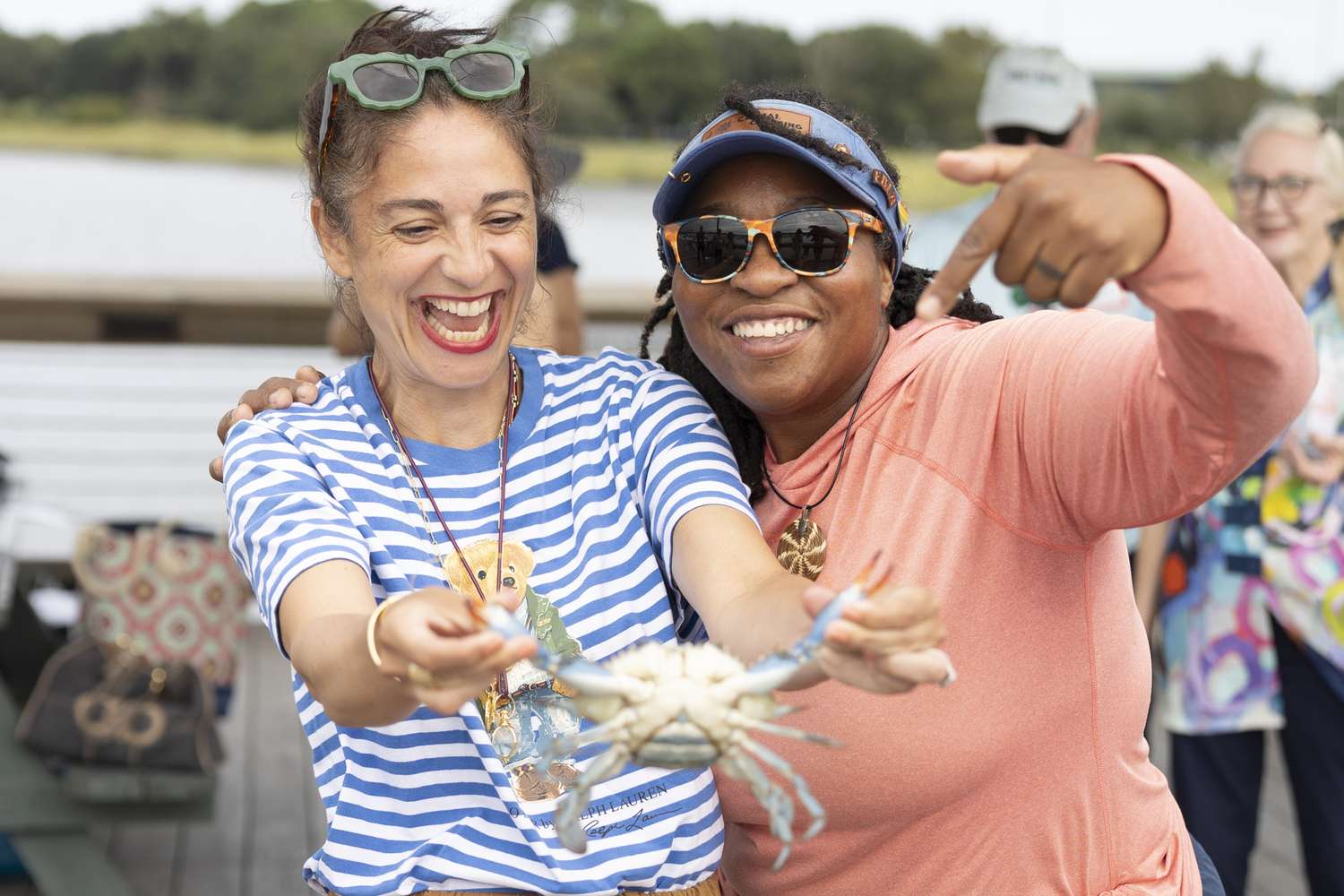
If the marsh is the classroom, Tia Clark is its most charismatic professor. A Charleston native and a member of the prestigious Explorer’s Club, Tia has turned what began as a personal health journey into a global mission of cultural preservation through the Casual Crabbing with Tia experience. When you join her on the docks, you aren't just taking a tour; you are stepping into a two-hour immersive session of oral storytelling traditions and physical skill-building.
The Casual Crabbing with Tia experience is intentionally tactile. Forget the fancy modern fishing gear found in big-box retailers. Here, the tools are humble: a ball of twine, a weighted chicken neck, and a hand-woven cast net. Standing on the piers overlooking the Ashley and Cooper Rivers, guests learn to feel the nuances of the water. You will learn to read tidal flow patterns, understanding how the push and pull of the Atlantic dictates where the blue crabs will hide and when they will feed.
What makes this Charleston crabbing for tourists so unique is the shift in perspective. Tia doesn’t just show you how to catch a crab; she explains why the Gullah Geechee crabbing legacy matters. As you wait for that telltale tug on your line, she weaves stories of the elders, the Gullah creole language, and the deep spiritual connection the community maintains with the salt marshes. It is one of the few places where learning Gullah heritage through hands-on maritime experiences feels entirely organic rather than academic.
Tia’s Pro-Tips for the Marsh
- Patience is a Skill: A crab doesn't "bite" like a fish. It pinches. Give it time to get a good grip on the bait before you start your slow, steady pull.
- Watch the Reeds: Crabs love the edges where the marsh grass meets the mud. That's their highway.
- The Shadow Trick: Try not to let your shadow fall over the water where your line is. Crabs are wary of predators from above and will let go if they see a sudden change in light.
Mastery of the Marsh: Techniques and Tools
To master Gullah Geechee crabbing techniques for blue crabs, one must understand the two primary methods of harvest: the hand-line and the cast net. Each requires a different rhythm and a different relationship with the environment.
The hand-line technique, or what locals affectionately call "chicken on a string," is a masterclass in subtlety. You tie a chicken neck bait to the end of a weighted string and drop it into the murky depths. Chicken necks are chosen not because they are a delicacy, but because they are tough and leathery, making it difficult for the crab to tear off a piece and run away. As you stand on the dock, the world slows down. You feel the vibration of the crab's claws through the string. The goal is a slow, rhythmic retrieval—pulling the crab close enough to the surface to scoop it up with a long-handled dip net before it realizes it’s being hunted.
Then there are the cast net fundamentals. Throwing a net is a form of dance. It requires a specific weight distribution and a flick of the wrist that causes the net to open into a perfect circle, or "pancake," as it hits the water. This method is often used to catch bait fish or shrimp, but a skilled hand can use it to sweep up crabs along the muddy banks.
If you are planning a visit, the best times or seasons for crabbing in Charleston SC typically run from late spring through fall. When the water temperatures rise, the blue crabs become more active and voracious. However, even in the off-season, the marshes remain a place of profound beauty, offering a quiet sanctuary for those seeking family friendly cultural activities in Charleston Lowcountry.
| Tool | Traditional Use | Level of Difficulty |
|---|---|---|
| Hand-Line | Catching individual blue crabs | Beginner-Friendly |
| Cast Net | Catching bait fish and shrimp | Advanced / Physical |
| Dip Net | Securing the catch at the surface | Essential Support |
| Chicken Neck | Long-lasting bait for blue crabs | Lowcost / Traditional |
From Marsh to Plate: The Gullah Culinary Connection
The experience of Gullah Geechee crabbing doesn't end when the sun goes down and the buckets are full. It culminates in the kitchen. In the Gullah tradition, food is never just sustenance; it is a communal language. The prize of the day, those sweet and briny blue crabs, often find their way into "one-pot" meals that reflect a water-to-table experience in its purest form.
A Charleston vacation itinerary including Gullah Geechee culture would be incomplete without tasting the results of a day on the water. Traditional dishes like Red Rice, infused with tomato and spices, or the hearty Crab and Shrimp rice, are staples that have been passed down through generations. These recipes often utilize everything the marsh provides, emphasizing sustainable foraging and a deep respect for the resource.
For those who want to experience this culinary legacy without getting their hands salty, there are several Gullah-owned restaurants that serve as guardians of these flavors.
Gullah Dining Gems
- Hannibal’s Kitchen: A local institution known for its "Crab Feed" and soul-satisfying Gullah staples.
- Gullah Grub (St. Helena Island): Worth the drive for Chef Bill Green’s commitment to heritage techniques and seasonal ingredients. | Nana’s Seafood & Soul: Exceptional garlic crabs that capture the essence of Lowcountry dining.
Integrating these dining experiences into your trip allows you to see how the Gullah creole language and culture have shaped the broader identity of South Carolina. The transition from the muddy bank of the Cooper River to a shared plate of steaming seafood is the ultimate cultural journey.
FAQ
What is the traditional Gullah Geechee method of crabbing?
The most traditional method is the hand-line technique, which involves tying a piece of bait—historically chicken necks or other scrap meats—to a weighted string. The crabber feels for the tug of the crab and slowly pulls the line toward the surface, using a dip net to secure the catch. Cast nets are also used to harvest shrimp and smaller fish that support the coastal diet.
Are there guided Gullah Geechee crabbing experiences available?
Yes, the most famous experience is led by Tia Clark through her company, Casual Crabbing with Tia. These tours are highly curated, focusing on the intersection of maritime skills, local ecology, and Gullah Geechee history. They are widely considered a must-do for visitors seeking an authentic connection to Charleston's heritage.
What is the cultural significance of crabbing to the Gullah Geechee people?
Crabbing was a vital survival skill during and after the era of enslavement. Because Gullah communities were often isolated on Sea Islands, they relied on their West African maritime knowledge to forage from the marshes. Today, it remains a symbol of self-sufficiency, cultural resilience, and a deep, spiritual connection to the land and water.
Do you need a fishing license for crabbing in South Carolina and Georgia?
In South Carolina, a saltwater fishing license is generally required for recreational crabbing if you are using more than three lines or using certain types of gear like crab pots. However, when participating in a licensed guided tour like the Casual Crabbing with Tia experience, the licensing requirements are often covered by the tour operator. It is always best to check current SCDNR regulations before heading out on your own.
What equipment is needed for Gullah style crabbing?
Traditional crabbing takes very little specialized equipment. You need a spool of sturdy twine, lead weights, a package of chicken necks, and a long-handled dip net. You will also need a bushel basket or bucket to keep your catch and a set of tongs if you want to avoid a "pinch" from a grumpy blue crab.
Preserving the Saltwater Legacy
As the tide begins to turn and the Ashley River pulls back toward the sea, you realize that Gullah Geechee crabbing is more than just a search for dinner. It is an act of preservation. By choosing native-led experiences and supporting Gullah-owned businesses, you are helping to ensure that these ancestral survival skills are not lost to time or over-development.
The Lowcountry salt marshes are fragile, yet they have sustained generations through their abundance. To stand on a dock with Tia Clark, feeling the weight of the water and the pull of the crab, is to understand Charleston in a way that no museum or carriage tour can provide. It is immersive, it is sensory, and it is profoundly human. When you finally leave the marsh, you carry more than just the memory of a catch; you carry a piece of a living legacy that continues to flow through the heart of the South.